
The 13-Day Rally Just Broke. Here's What Theo's AI Is Watching Next.
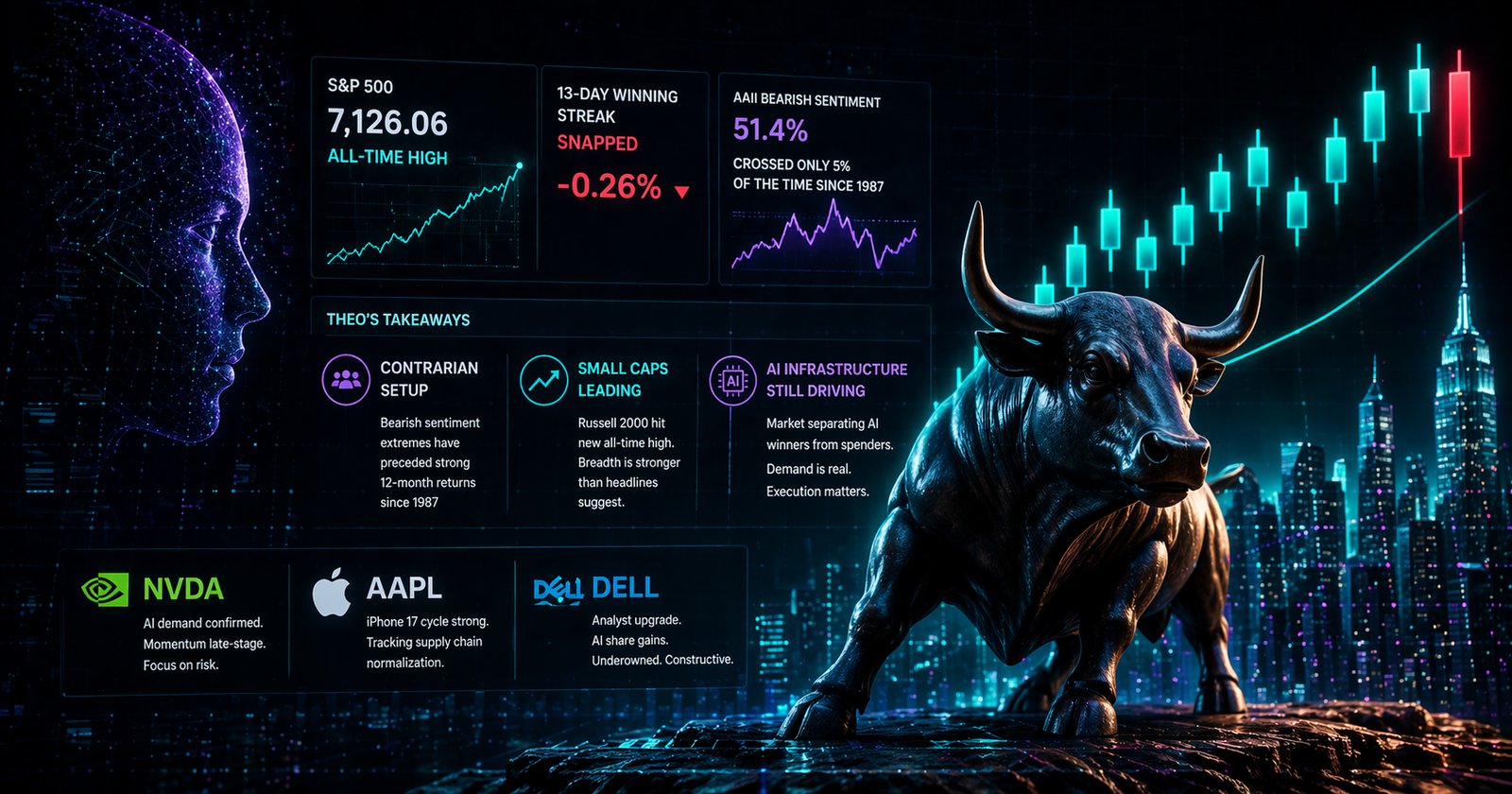
The Nasdaq's longest winning streak since 1992 ended on April 20. What the sentiment extreme, small-cap breadth and AI spending said about the rally.
On Monday, the Nasdaq's longest winning streak since 1992 came to a quiet end. Thirteen green days, snapped by a 0.26% decline. To most traders, that's noise. To Theo — HeyTheo's AI analyst — it's worth a closer look.
Because it's not the snap that matters. It's the context around it.
The setup no one saw coming six weeks ago
Rewind to late March. The S&P 500 had just printed a Death Cross. The 50-day moving average cut below the 200-day. Bearish sentiment in the AAII survey hit 51.4% — a level crossed only 5% of the time since 1987. Oil was spiking. Iran headlines dominated the tape. Analysts were cutting year-end targets.
Six weeks later, the S&P 500 closed Friday at 7,126.06 — a new all-time high. The index rallied right through the geopolitical fog, shrugged off the Strait of Hormuz concerns, and broke out above resistance that had capped it for weeks.
If you were trading on narrative, you got whipsawed. If you were trading on thesis, you saw this setup coming.
This is exactly the gap HeyTheo was built to close.
What Theo's analysis flagged — and what it's watching now
When we ran the major indices and Magnificent Seven components through Theo earlier this month, three themes emerged from the AI's thesis generation:
The bearish sentiment reading was a contrarian setup, not a warning.
Since 1987, the S&P 500 has returned an average of 16% in the 12 months after AAII bearish readings cross 50%. That's not a coincidence. That's crowded pessimism unwinding.Small caps were leading, which matters more than the headlines.
While financial media focused on mega-cap tech, the Russell 2000 quietly hit a new all-time intraday high on Monday — even on a red day for the S&P. When small caps lead a rally, the breadth is usually healthier than the tape suggests. Theo tracks this rotation by cross-referencing the Fear & Greed Index with sector-relative momentum.AI infrastructure is still the dominant earnings story — just with more scrutiny.
Dell's upgrade on Monday wasn't random. Analysts raised its two-year target to $245 from $200 on the back of AI server share gains. Meanwhile, Microsoft remains down 23% YTD as investors finally demand margin proof on AI capex. These two data points tell you the market isn't exiting AI — it's just separating the companies monetizing it from the companies still spending on it.
Why this moment matters for how you analyze stocks
What happened between March 14th and April 17th was a perfect example of why thesis-driven analysis beats reactive analysis.
The traders who did well weren't the ones with the best news feed. They were the ones who could read a setup — bearish sentiment extreme, CapEx trends intact, earnings estimates still rising — and hold a position through the noise.
That's what Theo is built to do. Not predict tops. Not call bottoms. Generate the thesis, flag the risk factors, and tell you what to watch next.
If you've been trading on headlines for the last six weeks, you already know it doesn't work. Try Theo free →
HeyTheo is an AI co-pilot for everyday traders & investors. This article is for informational purposes only and does not constitute investment advice.
 DELL
 MSFT